Iraq Elections: Fragmentation and Voter Apathy Plague Polls
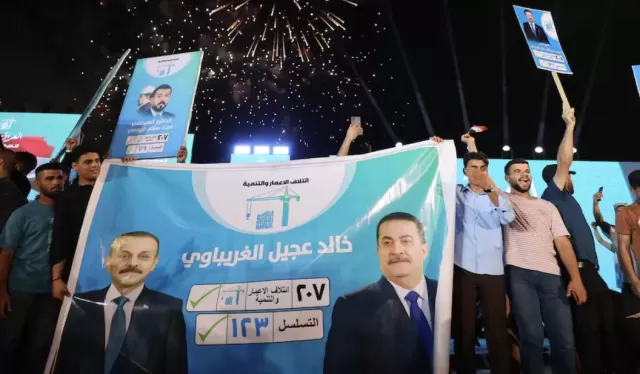
As Iraq prepares for its fifth general election since the 2003 overthrow of Saddam Hussein, the political landscape is marked by deep divisions and widespread voter apathy, experts tell The National. The upcoming vote sees a highly fragmented political scene, a stark contrast to the more unified blocs of two decades ago.
A Fragmented Political Landscape
This election features a complex array of 31 alliances, 38 political parties, and 75 independent candidates vying for the country's 329 parliamentary seats. Renad Mansour, director of the Iraq Initiative at London's Chatham House, highlights the significant splintering of major political groupings. "What were once unified blocs representing Shiite, Kurdish, and Sunni Arab communities have fractured considerably," Mansour explains. "Iraq's democracy, as it was established, is fundamentally built on ethno-sectarian lines, which has led to multiple Shiite, Kurdish, and Sunni lists emerging."
Even powerful Shiite militias, formerly operating under a single coalition, are now fielding associated political parties independently. Mansour notes, "Groups like the PMF [Popular Mobilisation Forces], which previously competed as a unified entity, are now also competing separately. This internal competition is a key driver of fragmentation within Iraq's political parties."
While these parties will contest the election as distinct electoral lists, they are generally expected to regroup after the results to form the largest possible bloc in parliament. However, the deep political fissures across Iraq's various communities may complicate the formation of clear, stable alliances, casting uncertainty over the post-election negotiations.
A massive field of 7,744 candidates, predominantly from sectarian-aligned parties with a smattering of independents, are contesting the election. These individuals are seeking to represent Iraq's 21.5 million registered voters in parliament. The Iraqi constitution mandates that 25% of parliamentary seats are reserved for women, with an additional nine seats allocated to religious minorities. Furthermore, the traditional post-2003 power-sharing agreement designates the speaker of parliament to a Sunni, the prime minister to a Shiite, and the president to a Kurd.
The Pervasive Issue of Voter Apathy
Voter turnout in Iraq has been on a downward trend, with the 2021 parliamentary elections registering a mere 41% participation, the lowest since 2003. This was a decline from the previous low of 44% in 2018. The situation is further compounded by a decrease in voter engagement, with only 21.4 million out of 32 million eligible voters having updated their details and secured their voter cards. Notably, unlike in previous elections, there will be no international polling stations this year.
Sajad Jiyad, an analyst of Iraqi politics at the Century Foundation, attributes this disengagement to a widespread feeling of disenfranchisement. "The public is understandably disappointed that elections don't consistently lead to tangible change," Jiyad states. "This disillusionment is a major factor in low voter turnout. People feel that they aren't voting for a clear winner or loser."
Past Iraqi governments have struggled to deliver on public expectations regarding essential services and employment, further eroding confidence and contributing to apathy. Jiyad elaborates that the current electoral system doesn't offer the public a straightforward outcome. "There isn't a single party or a specific figure that wins. Voters elect a parliament, and then lengthy negotiations spanning months are required to form a cabinet. The public often feels they don't truly get what they voted for."
Mansour echoes this sentiment, noting that many Iraqis have learned through experience that election outcomes don't always translate into meaningful governance. "The lessons learned from past elections, where even winners haven't necessarily formed the government, have contributed to a steady decline in voter turnout," he observes.
Despite the prevailing apathy, the head of the UN mission in Iraq, Mohamed Al Hassan, has urged Iraqis to exercise their democratic right and participate in the elections. "We hope for broad participation by the Iraqi people, allowing them to exercise their constitutional right in these elections with genuine commitment," Al Hassan stated. He encouraged effective and informed participation, urging voters to select candidates capable of serving the nation. The UN mission, tasked with monitoring the fairness and transparency of the elections, is scheduled to conclude its work by December, placing the responsibility for future electoral processes firmly in the hands of Iraqi authorities.